
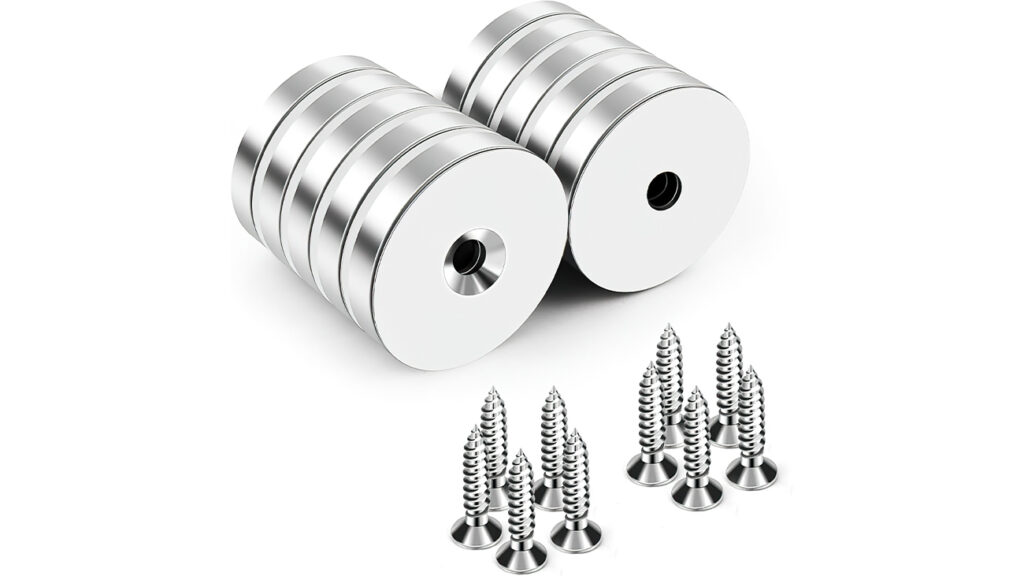
Industrial magnets are the unsung heroes of countless processes, from manufacturing and mining to healthcare and renewable energy. They’re not just decorative fridge items; they’re powerful tools capable of manipulating materials and energy in ways that drive modern industry. This article serves as a comprehensive guide to understanding industrial magnets – exploring their different types, diverse applications, and the crucial factors to consider when selecting the right magnet for a specific task. Whether you’re an engineer, a procurement specialist, or simply curious about the power of magnetism, this deep dive into industrial magnets will prove to be a valuable resource.
What are the Different Types of Industrial Magnets and Their Properties?
Understanding the different types of industrial magnets is crucial for selecting the most appropriate one for your needs. The main categories are permanent magnets and electromagnets. Permanent magnets retain their magnetism without requiring an external power source, while electromagnets require an electric current to generate a magnetic field.
Dauermagnete: These are the go-to choice for applications where consistent magnetic force is required. The main types include:
Neodym-Magnete (NdFeB): The strongest type of permanent magnet, offering exceptionally high magnetic strength. However, they are brittle and susceptible to corrosion if not properly coated. They are also more expensive. They’re commonly used in motors, generators, hard disk drives, and magnetic separators. Statistics show NdFeB magnets have seen a consistent growth in market share due to their performance capabilities.
Samarium-Kobalt-Magnete (SmCo): Offer excellent temperature stability and corrosion resistance, making them suitable for high-temperature applications. While not as strong as neodymium magnets, they outperform them in harsh environments. They find applications in aerospace, military, and specialized industrial equipment. They are generally more expensive than Neodymium magnets.
Alnico-Magnete: These magnets are composed of aluminum, nickel, and cobalt. They offer good temperature stability and corrosion resistance, although their magnetic strength is lower than neodymium and samarium cobalt magnets. They are often used in sensors, speakers, and magnetic bearings.
- Ferrit-(Keramik-)Magnete: These are the most cost-effective permanent magnets, made from iron oxide and barium or strontium carbonate. They are widely used in applications where high strength isn’t paramount, such as loudspeakers, holding magnets, and simple motors. While less strong than other options, they are resistant to demagnetization and are very affordable.
Electromagnets: These generate a magnetic field only when an electric current is applied. The strength of the magnetic field can be controlled by adjusting the current.
- Solenoids: A coil of wire that produces a magnetic field when current flows through it. Used in valves, relays, and actuators.
- Toroid Magnets: Wound in a circular shape, providing a confined magnetic field.
Where Are Industrial Magnets Commonly Used?
The applications of industrial magnets are incredibly diverse, spanning virtually every industry. Their versatility makes them indispensable components in many critical processes.
- Herstellung: Magnets are integral to many aspects of manufacturing. Robotic arms use magnets for pick-and-place operations. Magnetic separators remove ferrous contaminants from materials. Magnetic chucks hold workpieces securely during machining. The utilization of magnetic lifters streamlines the handling of heavy steel plates, significantly enhancing efficiency and safety.
Mining: Extracting valuable minerals from raw ore often involves magnetic separation. High-intensity magnetic separators (HIMS) efficiently separate magnetic and non-magnetic materials, improving mineral recovery.
- Food Processing: Powerful magnets remove metal contaminants from food products. This is especially crucial to ensure consumer safety and protect processing equipment from damage.
Healthcare: MRI machines rely on extremely powerful superconducting magnets to generate detailed images of the human body. Magnetic resonance imaging is a vital diagnostic tool. Magnetic drug delivery systems are also under development, enabling targeted treatment of diseases.
- Erneuerbare Energien: Wind turbines utilize powerful magnets in their generators to convert wind energy into electricity. The efficiency and reliability of wind turbines hinges on the properties of these magnets.
- Automobilindustrie: Electric vehicles use magnets in their motors. Magnetic sensors are also used throughout vehicles for various functions like detecting wheel speed and monitoring engine performance.
- Recycling: Magnets play a vital role in separating recyclable materials. They efficiently separate ferrous metals from non-ferrous materials, streamlining the recycling process.
How Do You Determine the Required Magnetic Strength for Your Application?
Determining the necessary magnetic strength is a critical step in selecting the appropriate industrial magnet. Insufficient strength can lead to failure, while excessive strength can be unnecessarily costly or even dangerous.
Consider the Load: The weight and material of the object you need to attract or lift directly influence the required magnetic force. A heavier load necessitates a stronger magnet. Different materials (eg. steel, iron, certain alloys) will react differently in the presence of a magnetic field. Understanding the load’s magnetic permeability is essential.
Assess the Air Gap: The distance between the magnet and the object, known as the air gap, significantly reduces magnetic force. Larger air gaps require stronger magnets to compensate for the loss of attraction. Even small air gaps caused by coatings or debris can affect performance.
- Überlegungen zur Temperatur: High temperatures can demagnetize certain types of magnets, especially neodymium magnets. If the application involves elevated temperatures, choose a magnet material with high temperature stability, such as samarium cobalt or alnico magnets. Refer to the magnet’s datasheet for its Curie temperature, beyond which it loses its magnetic properties.
Environmental Factors: Corrosion can weaken magnets over time. If the magnet will be exposed to corrosive substances or humid conditions, choose a corrosion-resistant material or apply a protective coating.
Perform Calculations and Testing: There are software programs and calculators useful for estimating the required magnetic force based on various parameters. Prototypes and real-world testing should also be utilized to confirm all calculations.
- Safety Margin: Always incorporate a safety margin into your calculations. This helps account for unforeseen factors and ensures the magnet can handle the load reliably.
What is the Significance of Magnetic Grade and What Do the Numbers Mean?
The grade of a magnet is a shorthand representation of its performance characteristics. It helps categorize and differentiate magnets based on their magnetic strength.
Understanding the Grading System:
- Neodymium Magnet Grades (N-Grades): Neodymium magnet grades, often represented as "Nxx," indicate the maximum energy product of the magnet material. The "xx" represents a number that roughly corresponds to the maximum energy product in MGOe (Mega Gauss Oersteds). A higher number indicates a stronger magnet. For example, N42 is stronger than N35. Common grades include N35, N42, N52, etc.
- Example Interpretation: An N52 magnet has a maximum energy product of approximately 52 MGOe. This translates to how much energy the magnet can store and release. This is important in high-performance applications.
- Beyond N-Grades: some manufacturers designate high-temperature neodymium magnets with letters suffixed to the numberic grade (e.g., N42SH, N35UH). These indicate the maximum operating temperature. For example, "SH" might mean "Super High" temperature resistance. These grades come at a price premium.
- Importance of Grade Selection: Selecting the appropriate grade is a balancing act between performance and cost. Higher grades are more expensive, but they offer superior magnetic strength for a given size. Choose the lowest grade that meets your application’s requirements to optimize cost-effectiveness.
- Checking Manufacturer Data: Always check the manufacturer’s datasheet for the specific properties of the magnet grade. While the grading system provides a general indication of strength, there can be small variations depending on the manufacturer.
How Does Temperature Affect Magnet Performance and Longevity?
Temperature can significantly impact both the performance and lifespan of industrial magnets. Understanding temperature limitations is critical for ensuring magnets operate reliably over time.
Curie-Temperatur: Each magnetic material has a Curie temperature. This is the temperature at which the magnetic properties of the magnet are lost irreversibly. The magnet will not regain its magnetism upon cooling.
Reversible Loss of Magnetism: Below the Curie temperature, magnets may experience a reversible loss of magnetism as temperature increases. This means that the magnetic strength temporarily decreases, but it returns to normal when the temperature decreases. The magnitude of this reversible loss varies depending on the magnet material and temperature range.
Irreversible Loss of Magnetism: Exposure to high temperatures can also cause irreversible losses in magnetic strength. This is especially true for neodymium magnets. The irreversible loss is permanent, even after the temperature decreases.
Temperature Stability Considerations:
- Samarium Cobalt: These magnets exhibit excellent temperature stability, making them well-suited for high-temperature applications.
- Alnico: Alnico magnets also demonstrate good temperature stability.
- Ferrit: Ferrite magnets hold up relatively well in high temperatures.
- Neodym: Standard neodymium magnets have limited temperature stability and are prone to demagnetization at elevated temperatures. However, high-temperature grades of neodymium magnets are available with improved thermal performance.
- Mitigation Strategies: If your application involves high temperatures, use magnets with high temperature stability, use active or passive cooling mechanisms, or reduce the operating temperature.
What are the Key Factors in Selecting the Right Protective Coating for Industrial Magnets?
Most magnets, particularly neodymium magnets, are susceptible to corrosion. Protective coatings are essential for extending their lifespan and ensuring optimal performance in various environments.
Common Coating Options:
- Vernickeln: A common and cost-effective coating that provides good corrosion resistance. Often used in multiple layers (e.g., nickel-copper-nickel).
- Epoxid-Beschichtung: Excellent for harsh environments. Provides superior resistance to chemicals, moisture, and abrasion.
- Parylene-Beschichtung: A thin, pinhole-free coating applied through vapor deposition. Provides excellent protection, especially in humid conditions, and offers biocompatibility.
- Verzinkung: Provides good corrosion resistance at a moderate cost. Suitable for less demanding environments.
- Vergoldung: Offers excellent corrosion resistance and conductivity. Used in specialized applications, particularly in electronics.
Selection Criteria:
- Umwelt: Consider the operating environment, including humidity, exposure to chemicals, and temperature.
- Abrasion Resistance: If the magnet will be subjected to wear and tear, choose a coating with high abrasion resistance.
- Die Dicke: The thickness of the coating affects its protective properties. Thicker coatings generally provide better protection but can also affect the magnet’s dimensions and tolerances.
- Kosten: Balance the cost of the coating with its performance.
How Do You Safely Handle and Store Industrial Magnets?
Industrial magnets can be incredibly powerful and pose safety risks if handled improperly. Implementing proper safety procedures and storage practices is crucial for preventing accidents and injuries.
Personal Protective Equipment (PPE): Always wear gloves when handling magnets to protect your hands from pinching. Eye protection is also recommended to prevent projectile injuries if magnets unexpectedly snap together.
Quetschpunkte: Be extremely cautious of pinch points created when magnets attract each other or metal surfaces. Keep fingers and other body parts clear of these areas.
Elektronische Geräte: Magnets can damage electronic devices, including pacemakers, credit cards, and computer hard drives. Keep magnets away from these items.
- Heavy Objects: Large magnets can attract heavy metal objects with considerable force. Ensure that the surrounding area is clear of obstructions and that objects are securely supported.
Lagerung: Store magnets in a safe location away from children and unauthorized personnel. Magnets should be stored in a manner that prevents them from snapping together or attracting metal objects. Separate magnets with cardboard or plastic spacers.
- Transport: When shipping magnets, comply with all applicable regulations. Use appropriate packaging materials and labeling to ensure safe handling.
What are Some Emerging Trends in Industrial Magnet Technology?
The field of industrial magnets is continually evolving, driven by advancements in materials science, manufacturing techniques, and emerging applications.
- High-Performance Materials: Continuing research aims to develop new magnetic materials with higher energy products, improved temperature stability, and enhanced corrosion resistance.
- Additive Fertigung (3D-Druck): This technology allows for the creation of complex magnet shapes and custom designs tailored to specific applications.
- Rare Earth Element Reduction: Due to the environmental impact and geopolitical concerns associated with rare earth elements, research efforts are focused on reducing or eliminating their use in permanent magnets. Nanomaterials and alternative magnetic materials are being investigated as potential replacements.
- Magnetocaloric Materials: These materials experience a temperature change in response to a magnetic field. They are being explored for use in energy-efficient refrigeration and cooling systems. They offer an alternative to traditional compressor-based refrigeration.
- Advanced Magnet Designs: Optimization of magnet shapes and configurations to maximize performance in specific applications. Magnetic circuit design is becoming sophisticated with computer-aided optimization.
What Common Mistakes Should Be Avoided When Selecting Industrial Magnets?
Choosing the right industrial magnet can be complex. Avoiding common pitfalls can save time, money, and potential safety hazards.
Underestimating Strength Requirements: Accurately assess the load, air gap, and environmental factors to determine the correct magnetic strength.
Ignoring Temperature Considerations: Select magnets with adequate temperature stability for the operating environment.
Vernachlässigung des Korrosionsschutzes: Choose appropriate coatings or materials for corrosive environments.
Failing to Consider Demagnetization Risks: Understand the demagnetization characteristics of the magnet and avoid conditions that could lead to irreversible loss of strength.
Overlooking Safety Considerations: Always prioritize safety when handling and storing magnets.
- Choosing the Wrong Grade Based on Price Alone: While cost is a factor, prioritizing low cost over performance can lead to application failure.
- Not Verifying Manufacturer Specifications: Rely on manufacturer datasheets and specifications to ensure accuracy. Do not assume all magnets with the same grade are exactly the same.
Can Custom Magnet Designs Provide Enhanced Performance for Specific Applications?
Absolutely. Custom magnet designs can be highly beneficial when standard magnets don’t quite meet the specific demands of an application.
- Optimized Shapes: Custom shaping can concentrate magnetic fields where they are needed most. This is particularly useful in applications with complex geometries.
- Fine-Tuned Performance: Customizing the magnet’s dimensions, material composition, and pole configuration allows for precise control over its magnetic properties.
Integration: Custom designs can be seamlessly integrated into existing systems, optimizing overall performance.
- Material Selection Tailoring: By carefully selecting magnet materials and strategically combining them, it becomes possible to optimize performance characteristics such as corrosion resistance, temperature stability, and maximized magnetic field gradient.
- Benefits: Customized magnet designs lead to performance gains, improved efficiency, and integration with existing systems.
FAQ Section: Addressing Your Industrial Magnet Questions
Here are some frequently asked questions to further clarify key concepts about industrial magnets:
What is the difference between a magnetic field and magnetic flux?
A magnetic field represents the area surrounding a magnet where magnetic force exists. Magnetic flux, on the other hand, measures the total magnetic field passing through a given area and is directly related to the pulling or holding force of the magnet.
What does MGOe mean in magnet specifications?
MGOe stands for Mega Gauss Oersted. It’s a unit used to measure the maximum energy product of a magnet, which is a key indicator of its strength. A higher MGOe value indicates a stronger magnet.
How can I demagnetize a permanent magnet?
Permanent magnets can be demagnetized by exposing them to high temperatures exceeding their Curie temperature, applying a strong opposing magnetic field, or subjecting them to mechanical shock or vibration.
How do electromagnets compare to permanent magnets in terms of cost and applications?
Electromagnets typically involve higher operational expenses (power) but offer controllable magnetic strength and can be turned on or off as needed. Permanent magnets are more economical for consistent force but lack the field control of electromagnets.
Why are rare earth elements important in magnet manufacturing?
Rare earth elements like neodymium and samarium contribute greatly to the high magnetic strength and performance of modern magnets, notably in applications where small size and high power are required. However, manufacturers are seeking alternatives because of cost and supply chain risks.
What is the impact of industrial magnets on medical devices like pacemakers?
Industrial magnets can interfere with the operation of pacemakers, potentially causing malfunctions. It’s essential to maintain a safe distance between magnets and individuals with implanted medical devices.
Conclusion: Key Takeaways for Understanding Industrial Magnets
- Different Magnets for Different Needs: Choose between permanent magnets (Neodymium, Samarium Cobalt, Alnico, Ferrite) and electromagnets based on application requirements.
- Applications are Widespread: Industrial magnets are used in manufacturing, mining, food processing, healthcare, renewable energy, automotive and recycling.
- Strength Matters: Determine the required magnetic strength by evaluating the load, air gap, and environmental factors.
- Understanding Grades: Magnet grades (e.g., N35, N42) indicate their strength. Higher grades are stronger but also more expensive.
- Temperature Impacts: Temperature affects magnet performance. Ensure magnets are suitable for the operating temperature range.
- Protective Coatings are Key: Coatings like nickel, epoxy, or parylene protect magnets from corrosion.
- Safety First: Handle and store magnets safely to prevent injuries and equipment damage.
- Innovation is Ongoing: Emerging trends include high-performance materials, additive manufacturing, and rare earth element reduction.
- Customization Options Exist: Custom magnet designs allow optimizing the shape, material combinations, pole configuration, and integration with specific systems.
- Avoid Common Mistakes: Accurately assess magnet parameters to avoid costly mistakes and ensure safety.